Co-regulation in parenting can sound like a complicated concept, but it shows up in ordinary moments: the tone you use when your child is frustrated, the way you respond when they’re crying, and the support you offer when their feelings become too much to manage alone.
It can also feel difficult when their overwhelm starts becoming your overwhelm.
Your child gets louder. You get louder. They become more frustrated, and you feel your patience disappearing.
One helpful way to think about these moments is the difference between a thermometer and a thermostat.

Understanding Co-Regulation in Parenting
Co-regulation is the support we offer through a responsive relationship to help a child manage feelings, attention, and behavior.
That support can include a reassuring voice, a predictable boundary, help with a difficult task, or adjusting an environment that feels overwhelming.
For a young child, it might look like sitting nearby while they cry about leaving the playground. For an older child, it might mean listening to their frustration before helping them think through a problem.
Over time, these supported experiences give children opportunities to practice skills they can gradually use more independently.
They still need time, repetition, and support that fits their development.
The Thermometer and Thermostat Metaphor
A thermometer reflects the temperature around it. When the room gets warmer, its reading rises.
A thermostat helps influence the temperature.
In parenting, being a thermometer might look like matching your child’s intensity without realizing it.
They yell, and you yell back. They become upset, and your response adds more urgency to the moment.
Being a thermostat means noticing that pull and trying to offer something steadier.
You might slow your speech, reduce the number of words you’re using, or hold a limit without raising your voice.
This metaphor is a reminder of the influence you can have. Your child’s feelings are still their own, and many things affect how they respond.
What Co-Regulation in Parenting Can Look Like
Imagine your child is building a tower and it falls over.
They scream, push the blocks away, and say, “I can’t do anything!”
You might feel tempted to respond:
“It’s just blocks. Stop yelling and build it again.”
But you could pause and say:
“You worked hard on that, and it fell. You’re really frustrated.”
Then you might offer:
“Would you like some help, or do you want me to sit here for a minute?”
You’re acknowledging what happened and offering support without requiring them to recover immediately.
Later, when they’re ready, you can help them try again or talk about what to do when something feels difficult.
Co-Regulation Can Include a Firm Boundary
Now imagine your child wants another show, and you’ve said screen time is finished.
They cry, argue, and reach for the remote.
A grounded response could sound like:
“You really wanted another episode. We’re finished watching for today.”
You put the remote away and remain available.
If they welcome your company, you might sit nearby. If they ask for space, you can give them some while staying attentive to safety.
They may continue to be upset about the limit. You can support that disappointment while keeping your decision clear.
Your Calm Doesn’t Guarantee Their Calm
One common misunderstanding about co-regulation in parenting is that a calm response should quickly produce a calm child.
That expectation can leave parents feeling defeated.
You may offer a gentle voice and still hear screaming. You may validate a feeling and hear, “Go away!”
Your child might be tired, hungry, overstimulated, disappointed, or simply not ready for interaction.
Consider what support fits the moment. They may need fewer words, less noise, a little space, or time before they can accept help.
You don’t have to keep adding strategies until something appears to work. Sometimes a clear boundary and quiet availability are enough for now.
Being Steady Doesn’t Mean Hiding Every Feeling
You can feel frustrated and still work toward a thoughtful response.
You can also let your child see you manage a feeling in a simple, age-appropriate way:
“I’m feeling frustrated, so I’m taking a breath before I answer.”
That gives them an example of noticing an emotion and choosing what to do next.
Keep responsibility for your feelings with you. Your child shouldn’t have to comfort you or stop being upset to make you feel better.
If you need a brief pause, make sure your child is safe and explain simply what you’re doing.
Repair Is Part of Co-Regulation in Parenting
Sometimes you’ll react more strongly than you intended.
Once you’re settled enough, you can return and say:
“I raised my voice earlier. I’m sorry I yelled.”
If there was a limit involved, you can keep it clear:
“The answer is still no. I can say that without yelling.”
You can also invite reconnection without requiring immediate affection or forgiveness:
“Would you like to sit together, or do you need a little more time?”
Repair gives you a way to acknowledge the rupture and take responsibility for your part.
A Question to Carry Into the Next Hard Moment
When you notice yourself getting pulled into your child’s emotional intensity, try asking:
“What could I offer that would make this moment a little steadier?”
Maybe it’s a quieter voice. Maybe it’s a clear limit, fewer questions, or turning down the background noise.
You won’t always be able to offer the same amount of patience. Your own needs and capacity matter, too.
For practical steps to use when your stress is rising, read How to Stay Grounded During a Meltdown: A Parent’s Guide.
You can also watch or listen to “How to Stay Grounded When Your Child Is Falling Apart,” episode 19 of The Gentle Middle, for more on the thermostat metaphor.
And for everyday opportunities to connect outside the hardest moments, explore the Everyday Connection Cards.
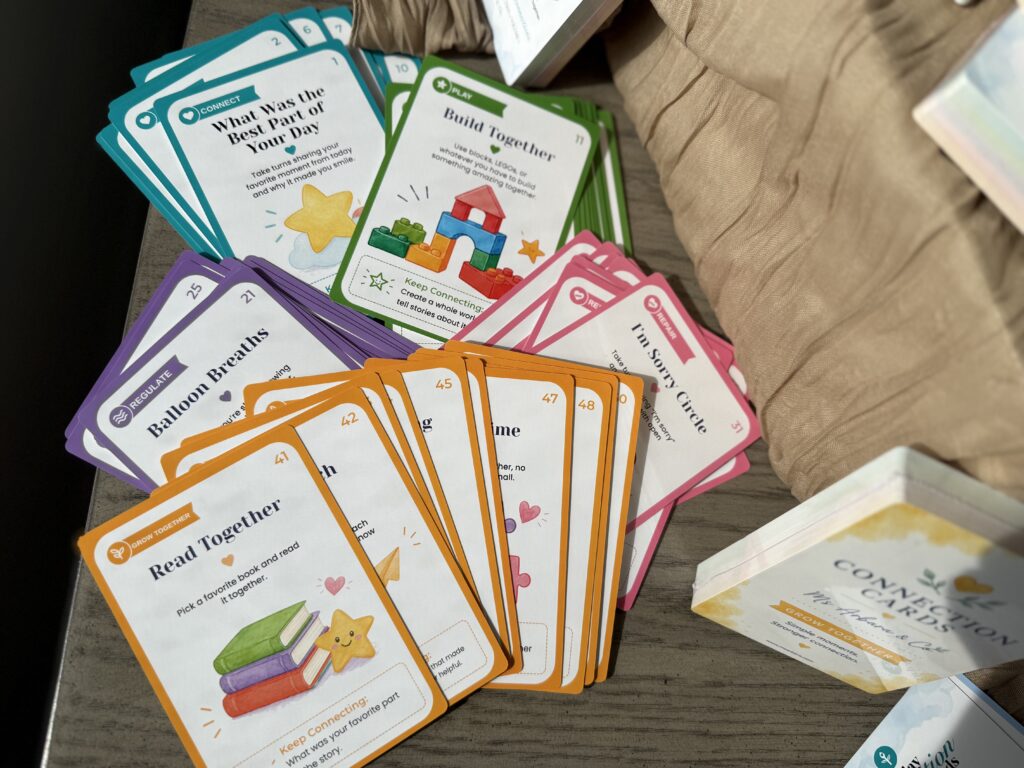
Co-regulation grows through repeated moments of support, limits, and reconnection. Each hard moment gives you another opportunity to notice what’s happening and choose a gentle next step.